We have compiled a list of manufacturers, distributors, product information, reference prices, and rankings for Atmosphere baking furnace.
ipros is IPROS GMS IPROS One of the largest technical database sites in Japan that collects information on.

Atmosphere baking furnace - List of Manufacturers, Suppliers, Companies and Products | IPROS GMS

Atmosphere baking furnace Product List

1~4 item / All 4 items

Displayed results

Electrostatic chuck and ESC atmosphere sintering furnace

For the firing conditions of ESC ceramic components. Contributes to improving the reproducibility of firing quality with an N₂ + H₂ reduction atmosphere and dew point control.

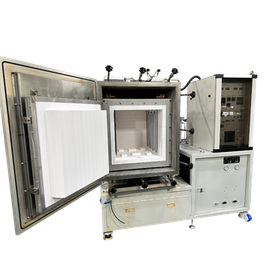
This is a high-temperature sintering furnace with atmosphere control designed for electrostatic chucks (ESC) and the firing, reduction treatment, and binder removal of ceramic components. It supports operation in N₂ and N₂ + H₂ reduction atmospheres, enabling high-temperature processing up to 1000°C for regular use and a maximum of 1650°C. Additionally, with optional features, it can accommodate wet gas introduction, dew point control, and dry/wet switching, making it useful for examining conditions related to the firing quality, densification, insulation properties, surface condition, and internal electrode state of materials. Since it allows for processing while switching atmospheres within the same chamber, it helps reduce movement between processes and exposure to outside air, contributing to improved reproducibility of firing conditions, reduced variation, and increased efficiency in prototype evaluation. If you are facing challenges with firing conditions for ESCs, N₂ + H₂ reduction treatment, or dew point management in ceramic firing, please feel free to consult us.

  • Industrial Furnace
  • Atmosphere baking furnace

Added to bookmarks

Bookmarks list

Bookmark has been removed

Bookmarks list

You can't add any more bookmarks

By registering as a member, you can increase the number of bookmarks you can save and organize them with labels.

Free membership registration

Multi-atmosphere sintering furnace FT-6800PH

This device allows for easy and efficient operation of pressure and vacuum with good reproducibility! It features a clutch door system for easy opening and closing, with a safe design!

【Features】 - Easy to reproduce pressure and vacuum with efficient operation - Simple opening and closing with clutch door mechanism; safety design - Maximum pressure: 0.9 MPa (Type 2 pressure vessel) - Maximum temperature: 1200℃ - Computer communication control + PID program control - Standard equipped with three gas systems and MFC specifications *Cooling chiller/pressurizing compressor/PO2 system/recorder are optional settings.

  • Electric furnace
  • Heating device
  • Ceramics
  • Atmosphere baking furnace

Added to bookmarks

Bookmarks list

Bookmark has been removed

Bookmarks list

You can't add any more bookmarks

By registering as a member, you can increase the number of bookmarks you can save and organize them with labels.

Free membership registration

Selection of furnace for vacuum atmosphere sintering | Supports degassing, oxidation suppression, and high purity processing.

Select the appropriate electric furnace according to the vacuum level and processing purpose.

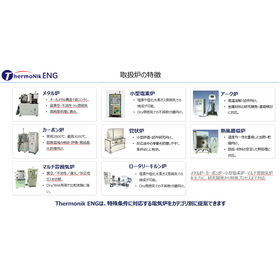
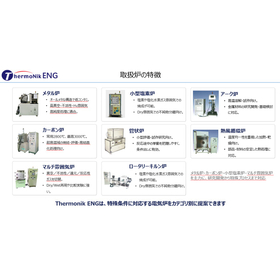
In vacuum atmosphere sintering, the required pressure and furnace configuration vary depending on the purpose. For degassing and drying, a pressure range of several Pa to several hundred Pa is sufficient, while for oxidation suppression, vacuum pumping and N₂/Ar replacement are necessary, and for high-purity processing, high vacuum levels of 10⁻³ to 10⁻⁴ Pa may be required. Therefore, it is important to consider not only the simple condition of wanting to sinter in a vacuum but also the processing purpose, temperature range, residual O₂, amount of generated gas, materials inside the furnace, heater materials, exhaust system, and safety measures. This document organizes the necessary pressure guidelines, furnace type selection, and confirmation points that affect equipment specifications based on the purposes of vacuum atmosphere sintering. - For considerations of degassing, drying, and oxidation suppression - For considerations of sintering in high vacuum and high-purity atmospheres - For differentiating between metal furnaces, multi-furnaces, carbon furnaces, and tube furnaces - For organizing specifications and considering sintering tests before equipment installation

  • Industrial Furnace
  • Atmosphere baking furnace

Added to bookmarks

Bookmarks list

Bookmark has been removed

Bookmarks list

You can't add any more bookmarks

By registering as a member, you can increase the number of bookmarks you can save and organize them with labels.

Free membership registration

Selection of furnace for N₂・Ar atmosphere sintering | Suitable for oxidation suppression and inert heat treatment

Organizing the gas types, substitution conditions, and furnace configuration to suppress oxidation.

Are you considering sintering and heat treatment with N₂・Ar atmosphere to suppress oxidation? Simply flowing inert gas is not sufficient to suppress oxidation. It is necessary to determine conditions that include the introduction of oxygen and moisture into the furnace, replacement procedures, gas flow rates, dew point, residual O₂, sample shape, jig material, and re-oxidation during cooling. Additionally, while N₂ is relatively low-cost and easy to use for general oxidation suppression, there is a possibility of nitriding or reactions depending on the material. Ar/He has low reactivity and is suitable for high-purity processing and high-temperature treatments, but it is important to consider gas costs, replacement amounts, and leak management. This document organizes the differentiation of gas types in N₂・Ar/He atmosphere sintering, furnace selection, and confirmation items such as dew point, residual O₂, and replacement procedures. ■ For oxidation suppression in N₂・Ar atmosphere ■ For sintering and heat treatment in inert atmosphere ■ For confirming the differentiation between N₂ and Ar/He ■ For organizing conditions of dew point, residual O₂, and replacement procedures ■ For sintering tests and furnace type selection before equipment installation

  • Industrial Furnace
  • Atmosphere baking furnace

Added to bookmarks

Bookmarks list

Bookmark has been removed

Bookmarks list

You can't add any more bookmarks

By registering as a member, you can increase the number of bookmarks you can save and organize them with labels.

Free membership registration